
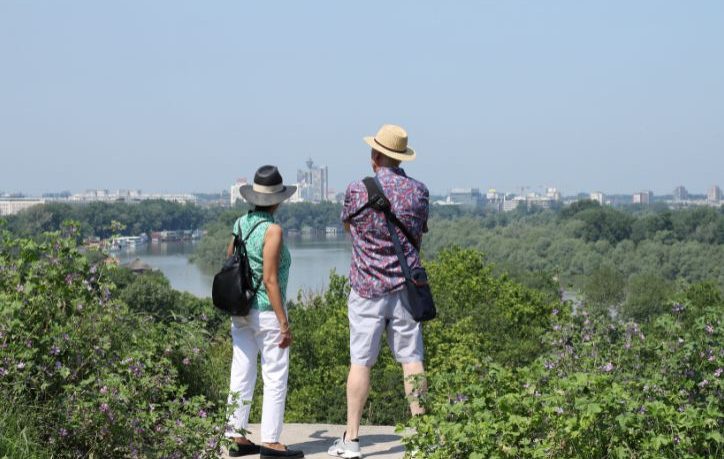
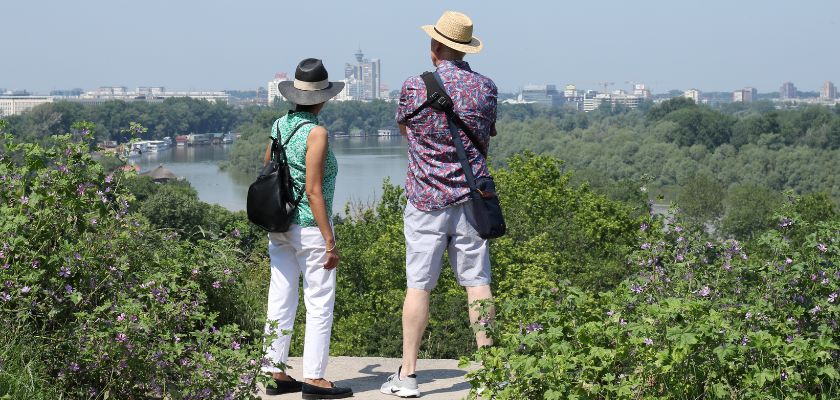
Some European trips almost design themselves. Paris and Provence. Rome and Tuscany. Vienna and Budapest. Serbia and Romania are not usually mentioned in the same breath.
That is precisely what makes the combination interesting.
For travelers who have already covered much of Europe’s familiar ground and are looking for somewhere genuinely different, a Serbia and Romania itinerary offers something increasingly difficult to find: two countries that still feel relatively undiscovered, yet fit together naturally as one journey.
The appeal is not simply that Serbia and Romania are less visited. Plenty of lesser-known destinations can be combined on a map. The question is whether the resulting trip actually works.
This one does.
Close Neighbors, Different Worlds
Serbia and Romania share a long border and centuries of interaction, but they are surprisingly different once you look beneath the map.
Serbia belongs to the South Slavic cultural and linguistic world; Serbian is a Slavic language. Romanian, by contrast, is a Romance language descended from Latin. Both countries have strong Eastern Orthodox traditions, yet their architecture, historical influences and sense of place developed along different paths.
Their political position in Europe is different too. Romania has been an EU member since 2007 and is now fully part of the Schengen Area, while Serbia remains outside both and is an EU candidate country. For travelers, the frontier is therefore an external Schengen border rather than the almost invisible crossing familiar from travel between many EU countries.
Historically, however, this border has not been a dividing line in the way many Balkan borders have. Serbia and Romania have no history of bilateral warfare between the two modern states and have repeatedly found themselves on the same side of major regional conflicts.
Why Serbia and Romania Work Better Together Than You Might Expect
At first glance, Serbia and Romania may seem like an unusual pairing. They are neighboring countries, but they are rarely marketed internationally as a natural two-country itinerary.
From a route-design perspective, however, they complement each other extremely well.
The journey can begin in Belgrade, continue north through the more Central European atmosphere of Vojvodina, cross naturally into western Romania, and then gradually unfold through Transylvania toward Bucharest.
There is no need for awkward backtracking or flights between places that should logically be connected by road.
More importantly, the character of the trip keeps changing.
Belgrade brings energy, layered history and a distinctly Balkan atmosphere. Northern Serbia introduces Habsburg architecture, vineyards and the slower landscapes of the Pannonian Plain. Cross into Romania and the journey changes again: Timișoara, medieval Transylvanian towns, the Carpathians and, eventually, Bucharest.
The countries share enough historical and geographical connections to make the route coherent, but they are different enough to prevent the journey from becoming repetitive.
That balance — continuity without sameness — is one of the things we look for when designing multi-country Balkan trips.
A Serbia and Romania Itinerary Should Feel Like One Journey
The most important mistake to avoid is treating the trip as two separate holidays joined at the border.
A good itinerary should have a sense of progression.
Belgrade works particularly well as a starting point. It is one of those cities that makes more sense after you have spent some time in it: Roman, Ottoman, Austro-Hungarian and Yugoslav histories all overlap, while modern Belgrade has a personality of its own.
From there, traveling north creates a gradual transition rather than a sudden jump into another country.
Depending on the length and focus of the trip, Novi Sad and the surrounding wine region can introduce a different side of Serbia before continuing toward Romania.
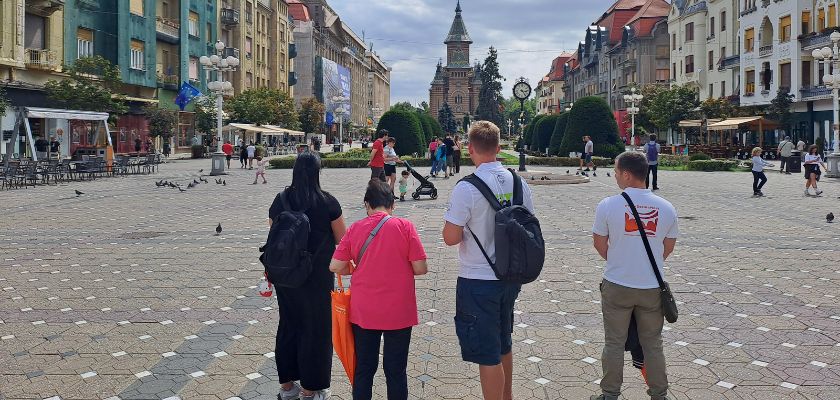
Timișoara is then a particularly logical first stop across the border. Architecturally and culturally, the transition feels natural, but the traveler is clearly entering a new country.
From western Romania, the route opens toward Transylvania.
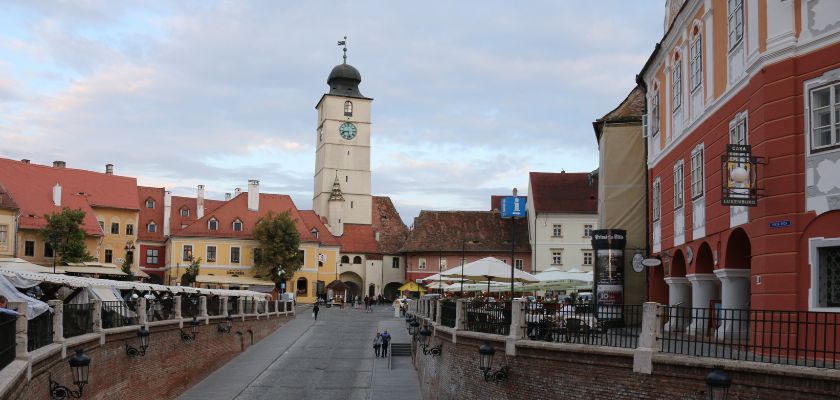
Sibiu, Sighișoara and Brașov each offer something different rather than functioning as interchangeable medieval stops. Between them are fortified churches, villages, mountain scenery and the broader cultural landscape that makes Transylvania much more interesting than its Dracula reputation suggests.
Bucharest then provides a strong finale: large, complex and very different from the towns that precede it.
Seen this way, a Belgrade to Bucharest itinerary is not simply transportation between two capitals. The places in between are the reason the route works.
How Much Time Do You Need?
It is possible to travel between Serbia and Romania quickly. That does not mean you should design the trip that way.
For most first-time visitors to both countries, around 10 to 12 days creates a sensible starting point. It provides enough time for Belgrade, at least part of northern Serbia, western Romania and the main Transylvanian route without turning every day into a race to the next hotel.
With additional days, the experience improves considerably.
Serbia can be extended beyond Belgrade and Novi Sad. Romania can be explored beyond its headline Transylvanian towns. More importantly, extra time allows the itinerary to include slower experiences — wineries, villages, local meals and places that rarely appear on a checklist.
Trying to squeeze both countries into too few days usually leads to the wrong compromise: keeping all the famous stops while removing the time needed to actually experience them.
A well-designed Serbia Romania trip is therefore less about maximizing the number of sights and more about maintaining a realistic rhythm.
Who Is This Combination Best For?
Serbia and Romania are particularly interesting for travelers who already know Europe well.
If this is your first trip to the continent and you have always dreamed of seeing Rome, Paris or Barcelona, there is little reason to pretend that those places should suddenly disappear from your list.
But travel priorities change.
Many experienced travelers eventually reach a point where another trip through Europe’s most famous destinations feels less exciting than discovering somewhere they know relatively little about.
That is where Serbia and Romania become compelling.
Both offer recognizable elements of a European journey — historic cities, castles, wine regions, countryside, strong food traditions and deep layers of history — without feeling like replicas of places you have already visited several times.
They suit travelers who are curious rather than simply checklist-driven, and who value the story connecting places as much as individual attractions.
For someone crossing the Atlantic or traveling from another distant market, combining the two countries also makes practical sense. The journey feels substantial enough to justify the distance without becoming one of those exhausting five-country tours where most memories are of motorways and hotel check-ins.
Why Not Visit Serbia or Romania Separately?
You certainly can.
Both countries deserve standalone trips, and neither needs the other in order to be worthwhile.
The advantage of combining them is different.
Serbia and Romania create contrasts that are difficult to achieve within a single-country itinerary. The architecture changes. Landscapes change. Historical reference points change. Even the rhythm of the cities changes.
At the same time, those contrasts unfold gradually enough that the journey retains a sense of geographical logic.
This is an important distinction.
The best multi-country itineraries are not created by asking, “How many countries can we add?” They are created by asking, “What does the next destination add to the journey?”
Romania adds a great deal to Serbia, and Serbia changes the way Romania is experienced when the two are traveled consecutively.
An Alternative to the Familiar European Circuit
There will always be destinations everyone knows before they arrive.
Serbia and Romania still require a little more explanation.
For some travelers, that is a disadvantage. For others, it is exactly the point.
A Serbia and Romania itinerary makes particular sense when you want Europe to feel unfamiliar again without choosing destinations simply because they are obscure.
The route has variety. The distances are manageable. The historical connections are real. And the journey has a natural beginning, middle and end.
Serbia and Romania may still sit outside the standard European travel circuit for many international visitors.
That is part of their appeal.
The better reason to combine them, however, is much simpler: the route actually works.
If you would rather see how this combination can work as a complete private journey, explore our Serbia and Romania Private Tour.